Moon Sweepers Factory Calculator
Build a balanced production line before you place a single machine.
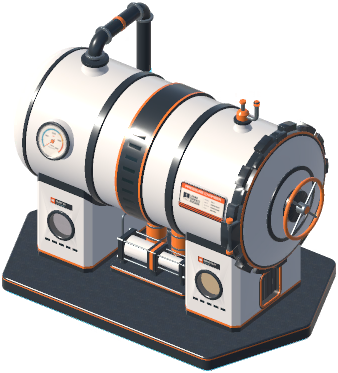
Production machines
Choose the machines you want to run.
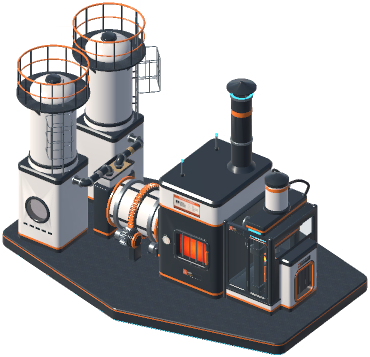

Keep the line moving
Supply enough dust and connect your power grid.
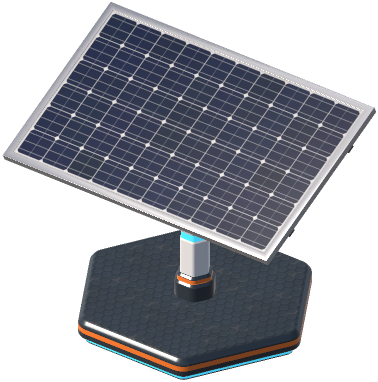
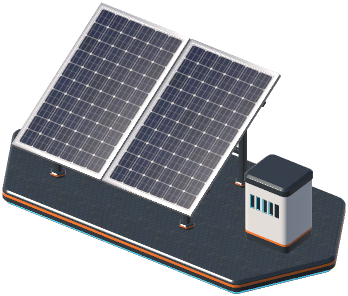
How this estimate works. The chamber gets dust first; remaining dust and produced sand feed the presses. Outputs assume continuous full-power operation, full batches and unblocked belts. The game’s actual power sharing and belt behavior are not simulated.
How to use the Moon Sweepers factory calculator
Estimate material balance and rated power before you build, then compare the estimate with a small in-game test.
1. Enter machines and the available dust
Select the number of pressure chambers, stone presses and packagers. Enter the amount of raw dust available to this line per minute. The model sends dust to the chambers first and uses what remains, together with the sand produced, to supply the presses.
A chamber converts up to 25 kg of dust into sand per minute. One press can use up to 10 kg of sand and 10 kg of dust per minute, producing up to 20 kg of stone. The calculator treats those as continuously supplied, full-power recipe limits.
2. Read stone, sand and dust separately
The stone figure is the model’s processed output. Sand left over is chamber output that the modeled presses do not consume; dust left over has not been assigned to a chamber or press. A positive remainder is not automatically an error: it helps identify the next input or machine constraint.
For example, one chamber, two presses and 45 kg/min of dust yield up to 40 kg/min of stone and 5 kg/min of remaining sand. The calculation assumes that the chamber receives 25 kg/min first and the presses receive the remaining 20 kg/min.
3. Check the power warning and value
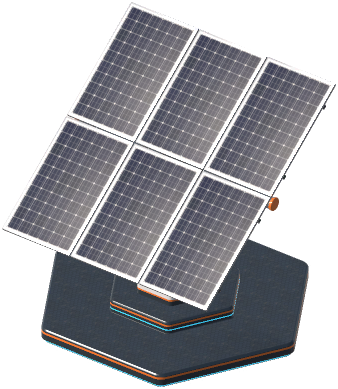
A pressure chamber has a 10 kW running rating and a stone press has an 18 kW rating. The example therefore needs 46 kW. Three solar trackers have 48 kW of combined peak output; at the calculator’s 50% sunlight setting they provide an estimated 24 kW, so the warning appears.
The displayed output does not slow down when the warning appears: it still shows the full-power material model. Processed material value uses base prices of $3/kg for sand and $7/kg for stone. It excludes unprocessed dust, payout upgrades, sale time and other costs; it is not measured profit.
4. Test the physical route
The calculator cannot tell whether a particular belt snaps to the right port, whether a destination is blocked or how batteries charge and discharge. Verify the actual dust and sand inputs separately, then follow one output through the destination. The packager attempt figure is not a measured belt delivery rate.
Frequently asked questions
What ratio of pressure chambers to stone presses should I try?
One chamber can make up to 25 kg/min of sand, and two presses need 20 kg/min of sand in total. They also require 20 kg/min of separate dust. Treat one-to-two as a theoretical starting point.
Why does output stay the same when power is insufficient?
The current material model assumes full power; the warning shows a shortfall, but the tool does not simulate reduced machine speed.
Can I save or share a factory setup?
The calculator saves your changes locally when browser storage is available. Use Copy share link to send the current configuration; it is not connected to your game save.
Values are reconstructed from game build f87fd7e5 and may change after updates. See sources and limitations.